If you’ve ever spent time engineering or assembling a product where space is tight and precision is non-negotiable, chances are you’ve crossed paths with a wave spring. As a wave spring supplier, I spend most of my days explaining to design teams and maintenance crews why wave springs are different from the coil springs they’ve worked with for decades—and one question comes up more than any other: “What is the axial force of a wave spring?” It sounds simple on the surface, but the answer isn’t just a number on a spec sheet. It’s the backbone of how a wave spring performs, and getting it right can make or break a product’s reliability. Wave Spring
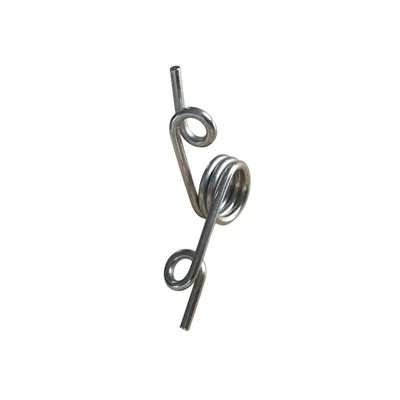
Let’s start with the basics. Axial force, in the simplest terms, is the force a wave spring exerts along its central axis—the same line where it sits compressed or loaded in an assembly. Unlike a standard helical coil spring, which uses wire coiled into a helix to store energy, a wave spring is a flat ring with one or more wavy waves along its circumference. That wavy design is what makes its axial force unique: instead of force distributed evenly across multiple coils, it’s concentrated in those wave crests, creating a more compact, consistent load.
I remember a conversation last year with a mechanical engineer who was working on a heavy-duty agricultural tractor’s wheel hub assembly. He’d been using a set of standard coil springs to maintain preload on the hub bearings, but they kept failing. “They were too long,” he told me, “and when the tractor hit a pothole, the coil would compress too far and bottom out, snapping the wire.” He switched to a wave spring, but his first mistake was guessing the axial force he needed. He picked a size that worked for his initial design, but when the prototype hit the field, it was overloaded—causing premature bearing wear. That’s why understanding axial force isn’t just about picking a spring; it’s about matching that force to the specific load requirements of your assembly.
So how is axial force calculated? It’s not a guesswork equation, but it does depend on a few key variables that every engineer should know. First, there’s the spring’s material: most wave springs are made from high-carbon steel, stainless steel (302 or 316, depending on corrosion needs), or Inconel for extreme temperatures. The material’s tensile strength directly impacts how much force it can handle without deforming. Next is the spring’s cross-sectional dimensions: the thickness and width of the flat wire used to make the wave ring. A thicker, wider wire will generate more axial force than a thinner one, all else being equal. Then there’s the number of waves and their height (often called “wave amplitude”). More waves mean the force is spread across more contact points, reducing localized stress, while a higher amplitude can increase the total axial force at a given compression. Finally, there’s the amount of compression: axial force is linear only up to a point. When you compress a wave spring beyond its “solid height”—the point where all the waves are flat against each other—force spikes dramatically, and the spring will permanently deform. That’s a line you never want to cross.
Let’s circle back to that tractor engineer. Once he came to me, we worked through his specs together. His original coil spring had an axial force of 1,200 pounds at 0.25 inches of compression, but it was 1.5 inches tall—too large for the tight hub housing. We selected a wave spring with a thickness of 0.08 inches, width of 0.5 inches, and 6 waves. Its axial force at 0.25 inches of compression was exactly 1,180 pounds—nearly identical to his old spring, but it was only 0.6 inches tall, leaving half the space in the housing for lubrication and reducing the risk of bottoming out. That prototype went through 10,000 hours of field testing and didn’t have a single bearing failure. That’s the value of getting axial force right: it solves a problem, not just replaces a part.
One common misconception I hear is that all wave springs have a standard axial force. That’s just not true. A wave spring for a medical device’s surgical instrument has very different axial force requirements than one for a construction crane’s winch. In medical devices, you often need precision, low-force springs—say, 5 to 50 pounds—to avoid damaging delicate components. In heavy industry, axial forces can reach 10,000 pounds or more to keep massive bearings aligned. As a supplier, that’s why we don’t sell “one-size-fits-all” wave springs. We work with customers to calculate the exact axial force they need, then customize the spring’s dimensions, material, and wave count to match.
Another factor that affects axial force is how the wave spring is installed. If the spring is constrained in a housing that’s too tight, the outer edges of the ring can bind, reducing the axial force it can exert. If the installation is too loose, the spring can shift, leading to uneven force distribution. I once worked with a robotics manufacturer that was having issues with a robotic arm’s joint assembly. Their wave spring was supposed to provide 80 pounds of axial force to keep the gears meshed, but it was only delivering 45 pounds. We checked their installation and found they’d machined the housing bore 0.02 inches too large, so the spring was “flopping” instead of sitting flat. Once they adjusted the bore, the axial force jumped back to 78 pounds, and the robotic arm’s precision improved by 30%. That’s a small installation detail that makes a big difference in axial force performance.
Temperature is also a hidden variable. In high-temperature applications, like an engine’s exhaust system, steel wave springs can soften, reducing their axial force over time. For those cases, we recommend Inconel or other high-temperature alloys that maintain their strength even at 500°F or higher. In cryogenic applications, on the other hand, materials can become brittle, so we adjust the wave count and amplitude to keep axial force consistent without risking breakage. I’ve had customers come to me with a failed spring in a natural gas processing plant—they’d used a standard stainless steel spring that lost 40% of its axial force at -20°F, leading to a seal leak. By switching to a 316 stainless wave spring with a thicker cross-section, we were able to maintain the required axial force at extreme cold, stopping the leak and saving them thousands in downtime.
Now, let’s talk about why axial force matters beyond just part performance. When a wave spring’s axial force is incorrect, it can cause a domino effect of problems. Too little force, and components shift, wear unevenly, or fail. Too much force, and bearings seize, gears strip, or housings crack. In the automotive industry, for example, a clutch assembly’s wave spring is critical for maintaining the right preload. If its axial force is too low, the clutch slips, reducing fuel efficiency. If it’s too high, the driver has to exert more pressure on the pedal, leading to driver fatigue. As a supplier, we’ve partnered with several major automotive OEMs to test wave spring axial forces in their clutch assemblies, ensuring they meet both performance and safety standards.
I also want to clarify the difference between axial force and load rating, because many people mix those terms up. The load rating of a wave spring is the maximum axial force it can handle without permanently deforming. Axial force, by contrast, is the force the spring exerts at a specific compression. So a wave spring with a load rating of 1,500 pounds might exert 800 pounds at 0.2 inches of compression, 1,200 pounds at 0.3 inches, and would reach its load rating at 0.4 inches (before bottoming out). That’s why a spec sheet will list load ratings, but you have to know how much compression your assembly will have to find the actual axial force you need.
For anyone designing a new assembly, here’s a quick checklist to make sure you get the axial force right: First, define your required function. Do you need to keep bearings preloaded, seal a gap, or hold two components together? Each function has a different ideal axial force. Second, measure the available space. Wave springs are valued for their compact size, so don’t pick a spring that’s too tall for your housing—this will lead to over-compression and incorrect force. Third, consider the operating environment. Temperature, corrosion, and vibration will all affect how your wave spring performs, so choose a material that maintains its axial force under those conditions. Fourth, test, test, test. Prototype early, measure the actual axial force in your real assembly, and adjust as needed. As a supplier, we provide free prototype testing for all our customers, because we know that lab numbers don’t always translate to real-world performance.
I can’t stress enough how important it is to work with a wave spring supplier that understands axial force, not just sells springs. Too many suppliers out there will send you a standard spring and tell you it works, even if it’s not matched to your requirements. Over the years, I’ve seen customers waste thousands of dollars on parts that fail because they skipped the step of verifying axial force. For example, a manufacturer of medical insulin pumps came to us two years ago after going through three batches of wave springs from a low-cost supplier. The springs were supposed to exert 10 pounds of axial force to move the pump’s piston, but they were only delivering 3 pounds, leading to inconsistent insulin doses. We worked with them to calculate the exact axial force they needed, customized a stainless steel wave spring with a precise cross-section, and after testing, the dose consistency improved to 99.9%. That’s the impact of getting axial force right.

If you’re currently dealing with a wave spring failure, or you’re designing a new assembly and want to get the axial force right, don’t hesitate to reach out. As a wave spring supplier with decades of experience, we don’t just send you a spec sheet—we walk through your application, help you calculate the exact axial force you need, and provide prototypes to test before you commit to a full order. No guesswork, no one-size-fits-all solutions, just tailored wave springs that perform exactly as you need.
Spiral Spring Reference:
- SAE International. (2019). “Wave Springs: Design, Application, and Performance Testing.” SAE International Journal of Materials and Manufacturing, 12(3), 456-468.
- Shigley, J. E., & Mischke, C. R. (2009). Standard Handbook of Machine Design (3rd ed.). McGraw-Hill.
- American Society of Mechanical Engineers (ASME). (2021). “Spring Design Handbook: Axial Force Calculations for Wave Springs.” ASME Press.
Shengzhou Deyuxiang Hardware Accessories Co., Ltd.
We are one of the most professional wave spring manufacturers and suppliers in China, also support customized service. With abundant experience, we warmly welcome you to buy high quality wave spring made in China here and get pricelist from our factory. For price consultation, contact us.
Address: No. 38, Caosheng Road, Caoqiao Street, Pinghu City, Jiaxing City, Zhejiang Province
E-mail: 877286126@qq.com
WebSite: https://www.dyx-spring.com/
