Hey there! I’m a supplier in the suturing and knotting game, and today I wanna chat about something super important: the impacts of patient movement on suturing and knotting. It’s a topic that doesn’t get enough attention, but it can make a huge difference in the outcome of a procedure. Suturing and Knotting

Let’s start with the basics. When a patient moves during suturing and knotting, it can throw off the whole process. You see, suturing is all about precision. The goal is to close a wound neatly and securely, and any movement can mess that up. For example, if a patient twitches or jerks, the needle might not go in where it’s supposed to. This can lead to uneven stitches, which not only look bad but can also affect the healing process.
Uneven stitches can create gaps in the wound, allowing bacteria to enter. This increases the risk of infection, which is a major concern in any surgical or medical setting. And let’s not forget about the pain. If the stitches are uneven, they can pull on the skin in an uncomfortable way, causing the patient more distress.
Knotting is also affected by patient movement. A good knot is essential for keeping the suture in place. But if the patient moves while you’re tying the knot, it can come loose. A loose knot means the suture won’t hold the wound together properly, and you might have to redo the whole thing. This not only wastes time but can also cause more trauma to the patient.
Now, let’s talk about the different types of patient movement. There are involuntary movements, like muscle spasms or shivering, and voluntary movements, like trying to get comfortable or reacting to pain. Involuntary movements are often harder to control. For example, a patient who’s under anesthesia might still have muscle twitches. These can be really tricky to deal with because they come out of nowhere.
Voluntary movements, on the other hand, can sometimes be managed. You can talk to the patient and try to get them to stay still. But in some cases, especially if the patient is in a lot of pain, it can be really difficult. For instance, a patient with a deep cut might be so uncomfortable that they can’t help but move.
So, what can we do to minimize the impacts of patient movement on suturing and knotting? Well, one of the most important things is to use the right equipment. That’s where I come in as a suturing and knotting supplier. We offer a range of high – quality sutures and knotting tools that are designed to be more forgiving in case of movement.
Our sutures are made from materials that are strong and flexible. They can withstand a certain amount of pulling and stretching without breaking. This means that even if the patient moves a little bit, the suture is less likely to snap. And our knotting tools are easy to use, even in less – than – ideal conditions. They allow for quick and secure knotting, reducing the time the patient has to stay still.
Another thing we can do is to use proper techniques. For example, some suturing techniques are more stable than others. Continuous sutures, for instance, can be a good option because they provide a more even distribution of tension across the wound. This makes them less likely to come loose if the patient moves.
We can also use local anesthesia to reduce the patient’s pain and discomfort. When a patient is in less pain, they’re more likely to stay still. And if possible, we can use restraints to keep the patient from moving too much. But this has to be done carefully to make sure the patient isn’t injured or made more uncomfortable.
In addition to these practical solutions, communication is key. We need to talk to the patient before the procedure and explain what’s going to happen. Let them know why it’s important to stay still and give them some tips on how to do it. For example, we can tell them to take slow, deep breaths or to focus on a specific point in the room.
Now, I know all this might sound like a lot of work, but it’s worth it. By minimizing the impacts of patient movement on suturing and knotting, we can improve the quality of the procedure and the patient’s outcome. And that’s what it’s all about, right?
As a suturing and knotting supplier, I’m always looking for ways to help medical professionals deal with these challenges. We’re constantly researching and developing new products to make suturing and knotting easier and more effective.
If you’re in the market for high – quality suturing and knotting supplies, I’d love to talk to you. Whether you’re a surgeon, a nurse, or a medical facility manager, we have the products you need. We can provide you with samples so you can see for yourself how our products work. And we offer competitive prices and great customer service.
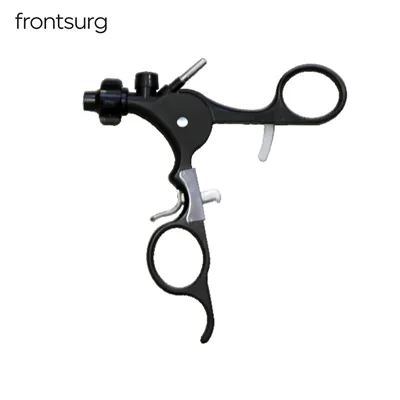
So, if you’re interested in learning more about our suturing and knotting products, don’t hesitate to reach out. Let’s have a chat about how we can work together to improve patient care.
Needle Holder References:
- "Surgical Techniques: Suturing and Knotting" by [Author’s name], [Year of publication]
- "Patient Movement in the Operating Room: Causes and Management" by [Author’s name], [Year of publication]
- "The Impact of Suture Material on Wound Healing" by [Author’s name], [Year of publication]
Frontmed (Hangzhou) Trading Co., Ltd.
Frontmed (Hangzhou) Trading Co., Ltd. is one of the most experienced suturing and knotting equipment manufacturers and suppliers in China, also supports custom service. Please rest assured to wholesale high quality suturing and knotting equipment made in China here from our factory. Contact us for more details.
Address: Room 406, Building 6, No.1688 Chunjiang East Rd, Tonglu, 311500, Hangzhou
E-mail: alex@frontsurg.com
WebSite: https://www.frontsurg.com/
