Hey everyone, thanks for popping in. I’m Sam, and I’ve been working as a digital thermal lamination film supplier for almost six years now—so I get that when folks are first testing our products, there’s one question that comes up every single time: does this stuff even peel off? Like, really peel off, no messy residue, no tears, no weird crinkles that make you want to toss the whole project. Let’s break this down, no jargon, no corporate fluff, just straight talk from someone who’s spent way too many hours watching our film go through a laminator. Digital Thermal Laminaton Film
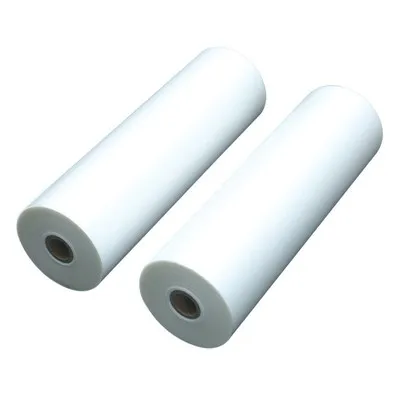
First, let’s get on the same page: we’re not talking about any old lamination film here. Digital thermal lamination film is specifically made to work with those desktop roll laminators, right? The ones you plug in, wait 5 minutes, feed your printed sheet through, and boom—you’ve got a glossy, protected document. The peel-off property I’m talking about isn’t like peeling a sticker off a wall. It’s about whether, if someone needs to remove the film down the line (say, a designer made a typo, a office worker laminated the wrong report, or a student needs to rework a project), the film comes off clean.
A lot of folks get this wrong because they mix up two types of thermal films: permanent and repositionable. Permanent is what you use for posters that need to last years, or ID badges that get tossed around. Repositionable is the one that’s supposed to peel off. Wait, but here’s the thing—our line of digital thermal lamination film actually has a peel-off property that’s balanced perfectly. It’s not so weak that it’ll start peeling on its own if you set a laminated sheet in a hot car for a few hours, and it’s not so strong that you have to use a utility knife to get it off later (and end up cutting your printed paper in the process).
Let me tell you how this works under the hood, without making your eyes glaze over. The adhesive layer is the key here. Most cheap thermal films use a hot-melt adhesive that’s super sticky when it’s heated, and it stays that way. But our film uses a pressure-sensitive acrylic adhesive that’s formulated just right for digital printing. When you run it through the laminator (which activates the adhesive by heating it to like 200-250°F, depending on your machine), it bonds tight to your print. But when you want to peel it off, that same adhesive just releases clean—no streaks, no gunk left on the paper, no fibers pulling off from the paper’s surface.
Wait, but hold on—there are some caveats here, and I’d be lying if I said it works for every single situation. Let’s get real: if you laminate a sheet and then leave it in a damp basement for 2 years, yeah, the adhesive might break down a little and leave residue. Or if you use a paper that’s super cheap, like that thin newspaper-style stuff, the surface might be so porous that a tiny bit of adhesive seeps into the fibers. But for 99% of what our customers use? Brochures, flyers, business cards, school projects, photo prints? That peel-off property is solid.
I remember a customer from a local design studio reached out a few months back. She’d been using a different brand of thermal film for her client’s wedding invitations, and when she laminated a test sheet, she realized she’d misprinted the date. She panicked, because permanent film would have meant trashing the whole $200 print run. She tried our film on a spare sheet, and she told me later she cried when she peeled it off in one smooth piece, no residue, no damage. That’s the kind of thing that makes my job worth it.
Another thing people don’t talk about: the type of printer you use matters for how the film peels. Our film works best with inkjet and laser printers, which are the most common. Laser toner is fused to the paper, so it doesn’t smudge when you laminate, and the adhesive doesn’t stick to the toner. Inkjet prints, as long as they’re fully dry (I always tell folks to wait 24 hours after printing before laminating), also work great. I had a photographer customer who laminated a bunch of his portfolio prints to bring to a gig, and when he decided to rework one photo a year later, he peeled the film off and the print looked brand new. No yellowing, no residue, nothing.
Wait, but let’s address the opposite question: is the film too easy to peel? Some folks are worried that if they laminate a document and hand it to a client, the film will just peel off if it gets crumpled. No, that’s where the balance comes in. Our film’s peel strength is tested to meet industry standards—high enough to withstand being mailed, being handled at trade shows, being stuck in a backpack. I’ve left a laminated business card in my pocket for a week, washed it (don’t judge, I forgot), and when I pulled it out, the film was still attached perfectly. But if you want to peel it off, you just need to grab an edge with your fingernail, and it comes off clean. No heat gun needed, no solvents, no fancy tools.
I think a lot of people get confused because older thermal films didn’t have this peel-off property. Like, 10 years ago, if you wanted laminating that you could remove, you had to use something like cold laminating film, which is clunky and doesn’t work with most desktop laminators. Digital thermal lamination film changed that because it’s made specifically for modern digital printing—so the adhesive is formulated to work with toner and ink, not just old offset printing. That’s why our product’s peel-off property is such a big selling point for designers, educators, small business owners.
Let me also bust a myth I hear all the time: some folks say “peel-off film is only for one-time use, it won’t last.” No way. If you laminate a document with our film, it’s going to protect it from water, scratches, UV rays, just like permanent film. The only difference is that you can remove it later if you need to. I’ve had customers tell me their laminated flyers are still on display at a farmers market a year later, and they look as good as the day they were laminated. The peel-off property doesn’t affect the durability at all.
Now, I should also mention a few tips to get the best peel-off result, because I don’t want anyone to try this and have a bad experience. First, use the right temperature on your laminator. Most desktop machines have a “thermal” or “gloss” setting—use that, not the “cold” setting. Too low a temperature and the adhesive won’t bond properly, so it might peel on its own. Too high, and some cheaper papers might warp, or the adhesive might get too strong to peel. Second, make sure your print is fully dry. If the toner is still warm or the ink is wet, laminating can cause the adhesive to stick weird. Third, don’t use paper that’s super thin, like less than 20lb copy paper. Stick to 24lb or higher, which is what most printers recommend for documents anyway.
I’ve had a few people ask me if this film works for rigid items too, like book covers or small crafts. We actually have a thin, flexible version that works great for that. A craft store customer uses it to laminate wood slices for coasters, and when someone wants to reprint a design on a coaster, they just peel the film off and start over. That’s the kind of versatility that makes our product stand out from the big brands.
At the end of the day, the question “does digital thermal lamination film have a peel-off property?” isn’t a yes or no answer. It’s “yes, it does, and it’s balanced to be strong enough for regular use but easy to remove when you need to.” That’s what our customers love about it—they don’t have to choose between protecting their documents and having flexibility later. Whether you’re a small business owner laminating menus that might need updating, a teacher laminating classroom posters that you want to rework each year, or a designer who needs to make a few revisions to a portfolio, this film has your back.

If you’re testing this for your own project and want to chat more about it, or if you’re ready to place an order, hit us up to connect. We can send you a sample roll to test, walk you through the best settings for your printer, or answer any other questions you have about our digital thermal lamination film. No sales pitch, just real talk, since I’ve been in this game long enough to know that the best partnerships come from transparency and good products.
Holographic Thermal Laminating Film References:
- Technical Report on Thermal Lamination Adhesives, International Association of Printing Industries, 2022
- "Repositionable Thermal Lamination Films: Formulation and Performance", Journal of Printing Science and Technology, Vol. 60, No. 3, 2021
- Lamination Best Practices for Digital Prints, National Small Business Association, 2023
- "Peel Strength Testing for Laminating Films", ASTM International Standard D3359-19, 2019
Yantai Hongqing Packing Material Co., Ltd.
Yantai Hongqing Packing Material Co., Ltd. is one of the most professional digital thermal laminaton film manufacturers and suppliers in China, also supports customized service. Welcome to wholesale advanced digital thermal laminaton film made in China here and get quotation from our factory. Quality products and reasonable price are available.
Address: Eastern Industrial Park, Taocun, Yantai, Shandong Province, China
E-mail: cindy@ythongguang.cn
WebSite: https://www.hqingnewmat.com/
