Hey everyone, if you’ve ever worked with customized PVC film for packaging, automotive interiors, signage, or even craft projects, you’ve probably asked yourself one key question more than once: “What’s the static friction coefficient here?” As a customized PVC film supplier, I get this question all the time—usually from production managers trying to avoid jams on packaging lines, packaging designers troubleshooting how labels stick, or even small-batch crafters testing if their custom film will lay flat on a workbench. Today, I’m breaking this down like we chat over a coffee, no stuffy lab jargon, just real stuff you can actually use. Customized PVC Film
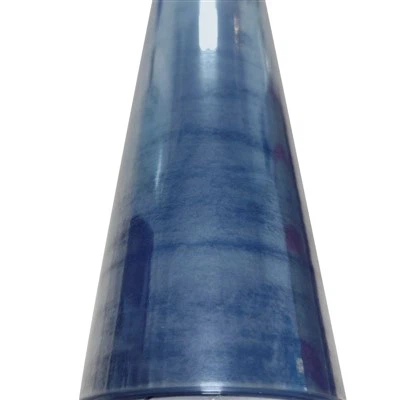
First, let’s get one thing straight: there’s no one-size-fits-all number for static friction coefficient (let’s just call it COF, okay? Way shorter). When someone asks, “What’s the static friction coefficient of customized PVC film?” the real answer is, “It depends.” And that’s not a cop-out—that’s because we custom-make every roll for your exact needs. Let me walk you through the biggest factors that change this number, straight from our production floor and the testing lab we work with.
First, what is static COF, anyway? For anyone who’s skipped high school physics (no judgment, I slept through half of mine too), static friction is the force needed to get two surfaces that are touching to start sliding. If you push a book across a table, the first little nudge it takes to move is static friction; once it’s sliding, that’s kinetic COF, which is lower. For PVC film, this is super important because if the static COF is too high, rolls jam when they’re fed into a packaging machine, or a custom film for a retail display won’t slide smoothly onto a shelf. If it’s too low, the film might be too slippery—like when a stack of custom PVC labels slides right off a pallet and crashes to the floor. Oops, we’ve all been there.
Now, back to why customization changes everything. When a customer comes to us asking for customized PVC film, we’re not just cutting a generic roll of PVC and slapping a logo on it. We tweak the resin blend, add special coatings, adjust the thickness, even treat the surface—all of which mess with COF. Let’s break down the main variables that affect our custom PVC’s static COF.
First up: the surface treatment. A lot of our clients need PVC film that prints well, right? If you’re printing product labels or custom signage, you can’t have a slippery surface that makes ink smear. So we do corona treatment on most of our custom film (that’s the thing that zaps the surface with a low-level electrical charge to make it “sticky” to ink or other materials). But here’s the thing—corona treatment also makes the surface rougher, which cranks up static COF. For example, a generic untreated PVC roll might have a static COF of like 0.2 (super slippery, perfect for when you want stuff to slide) but add a light corona treatment, and that jumps to 0.4 to 0.5. Add a heavier corona for better ink adhesion, and we’re looking at 0.6 to 0.7. That’s a big difference if you’re feeding that through a high-speed packaging line—too high, and it gets stuck every 10 rolls.
Next, the additives we use. Wait, PVC is plastic, so of course we add stuff to make it work for your project. Slip agents are the big one here—little additives like erucamide or oleamide that we mix into the resin before extrusion. These molecules migrate to the surface over time, creating a super thin layer that makes the film slippery, lowering static COF. But here’s the catch: we control how much slip agent we add, and when we add it, because too much and the film gets so slippery it won’t stick to anything (like adhesive labels falling off before they reach the product). For example, a custom PVC film for pallet wraps might have 0.1% slip agent, giving a static COF of 0.25, perfect for sliding a whole load of boxes onto a truck. But a custom PVC film for medical packaging, where you don’t want the inner layer sticking to the product, we use almost no slip agent—static COF around 0.5, so it stays smooth but not slippery enough to cause issues. Also, the shelf life of slip agents matters—if your custom roll sits in a warehouse for 6 months, the slip agent might have migrated, so COF drops a tiny bit. We note that on every custom spec sheet, by the way.
Thickness and rigidity also play a role. Thicker PVC film is stiffer, right? So when two thick PVC rolls are touching, they don’t conform to each other as much as thin, flexible film. Less surface contact means lower friction. For example, a 100-micron custom PVC film (think thick, like a pool liner) might have a static COF of 0.4, while a 25-micron custom film (super thin, like a sticker backer) might have a static COF of 0.5. That’s because the thin, flexible film wraps around itself more when it’s on a roll, creating more surface contact, so more friction. We also work with rigid PVC for some applications, like custom sign boards—rigid PVC has a higher static COF than flexible, usually around 0.5 to 0.6, because it’s stiffer and doesn’t squish as much when stacked.
Another big one: what the PVC film is touching. Static COF isn’t just about the PVC—it’s about both surfaces. A lot of customers forget this, and they get confused because their COF test on our lab bench says 0.4, but when they test it on their stainless steel packaging line, it’s 0.6. Wait, what? Because stainless steel is a smooth, hard surface, so the PVC’s surface roughness has more grip. If they test the same PVC film on corrugated cardboard (like a shipping box), the static COF jumps to 0.7, because cardboard is rough, so more friction. And if they test it on another roll of our custom PVC film? That’s usually around 0.4 to 0.5, depending on the treatment. I once had a client who insisted their rolls were “defective” because COF was higher than spec, but they’d been testing it on their rubber conveyor belt—turns out rubber is grippier than the lab’s test surface, so the COF was naturally higher. Got them sorted in 2 minutes, no big deal.
Now, let’s talk about real-world numbers from our custom orders, because that’s what you actually care about. Here are the most common customized PVC film products we make, and their typical static COF ranges—no vague stuff, actual numbers we test every time:
- Custom PVC labels for product packaging: Most of these have a light corona treatment and low slip agent, so static COF is 0.45 to 0.55. This is perfect because it’s grippy enough to feed through label applicators, but not so grippy that it gets jammed. We’ve had clients use these at 120 feet per minute on their lines with zero issues.
- Custom PVC pallet wrap: These are super slippery, so we add a decent amount of slip agent to let them slide over pallets and other shrink wrap. Static COF here is 0.2 to 0.25. That’s super low, exactly what you need when you’re wrapping 50 pallets a day and don’t want to waste time fighting with stuck film.
- Custom PVC for automotive interior trim: This one needs to be grippy enough to not slip when it’s molded, but not so grippy that it’s hard to install. We use no slip agent here, and a light corona for adhesion, so static COF is 0.5 to 0.55. We test these to make sure they meet auto industry specs, which are way stricter than regular packaging, by the way.
- Custom PVC signs and graphics: Rigid or semi-rigid, no slip agent, heavy corona treatment for ink. Static COF here is 0.55 to 0.65. That’s perfect for staying flat on retail displays or outdoor signs without sliding around, and the ink sticks like glue.
- Custom PVC for medical device packaging: Super clean, no slip agents that could contaminate products, low friction so it peels open easily. Static COF here is 0.4 to 0.45. We have to get this right because medical teams need to open packaging fast without fumbling.
Wait, but what if you need a specific COF? Like, you have a line that can only handle static COF of exactly 0.45, and 0.46 would jam the machine. That’s the whole point of customization, right? We can tweak every variable I mentioned earlier to hit that exact number. Last quarter, we had a snack food company come to us with a problem: their custom PVC film for wrapping candy bars kept jamming at 80 feet per minute, because the COF was 0.7, way higher than their line could handle. They needed it to stay on their printing press long enough to print nutritional labels, but slide easily into the wrapping machine. So we added a tiny bit more slip agent (we tested 0.05%, 0.07%, 0.09%) until we hit a static COF of 0.52. That was exactly what they needed—no more jams, and the ink still stuck perfectly. We do this all the time—tweak coatings, slip agents, thickness to hit your exact COF and other specs.
Also, important to mention: COF testing for PVC. A lot of clients test this wrong, which leads to confusion. The standard test is using a horizontal surface, a 200-gram sled with a steel or PVC bottom, pulling it across the film at a slow speed. But if you pull too fast, or use a different sled weight, you get a wrong number. We use a controlled testing lab for all our custom orders, following ASTM D1894 (that’s the standard test for plastic film COF, for anyone who wants to check). We give our clients a test certificate with their exact COF number, so they know exactly what they’re getting.
Let’s bust a common myth here, too. A lot of people think static COF goes down over time because plastic gets slippery. That’s partially true, but only for slip agent containing films. The slip agents migrate to the surface over 2-4 weeks after production, so COF drops a little, like 0.05 to 0.1. For films without slip agents (like medical or automotive), COF stays pretty consistent, because there’s nothing migrating. We tell all our clients that if they need a COF tested, do it 2 weeks after receiving the roll, because that’s when the slip agent has settled. We also note that on every order, so no surprises.
Now, if you’re reading this and you’re about to order customized PVC film, what should you ask for to get the right static COF? First, tell us what you’re using the film for. If it’s packaging, what line speed? If it’s labels, what’s the adhesive? If it’s signage, is it rigid or flexible? Second, tell us if you have a target static COF, or if there’s a maximum or minimum that will work for your process. We can work with that. For example, if you say “I need static COF no higher than 0.5 to avoid jams,” we will adjust the slip agent and surface treatment to hit that number, no guesswork.
I should also mention that we don’t do generic film here. Every roll we make is cut and tailored to your exact needs, so the static COF is never a one-size-fits-all number. If you order a roll of our standard “all-purpose” PVC, static COF is around 0.5, but that’s just a baseline. Custom orders can go from 0.2 up to 0.7, depending on what you need.

At the end of the day, static friction coefficient for customized PVC film isn’t a random number—it’s a spec we tune to make your product work better. If you’re tired of jamming lines, labels sliding off pallets, or packaging that’s impossible to process, hit us up to chat about your custom PVC film needs. We’ll walk you through exactly how we adjust COF (and other specs) to fit your project, no tech speak, no fine print.
PVC Printing Film References
ASTM International. (2021). Standard Test Method for Static and Kinetic Coefficients of Friction of Plastic Film and Sheeting. ASTM D1894-21.
Klempner, I., & Frisch, K. C. (1991). Handbook of Polymeric Foams and Foam Technology. Hanser Publishers.
Owens, D. K., & Wendt, R. C. (1969). Estimation of the Surface Free Energy of Polymers. Journal of Applied Polymer Science, 13(8), 1741-1747.
Nantong Dahe Composite New Material Technology Co., Ltd.
Address: South Side of Pinghai Highway, Pinghe Village, Dongshe Town, Tongzhou District, Nantong City, Jiangsu Province, China
E-mail: nantongdahe@outlook.com
WebSite: https://www.cndahetech.com/
