If you’re reading this, chances are you’ve hoisted a heavy briefcase onto your shoulder at the start of a workday, only to shift it after five minutes because your neck was cramping, your lower back was throbbing, or your arm felt like it was being pulled out of its socket. As someone who’s spent years designing and refining briefcases for busy professionals, I’ve seen it all: the one-shoulder slump, the awkward hand-to-hand carry, the weird “clamp it to your torso” gait that makes you look like you’re trying to hide a brick. But here’s the thing: most people carry their briefcases wrong, not because they’re lazy, but because no one’s ever given them a clear, science-backed way to do it. And as a briefcase supplier, my job isn’t just to sell you a bag—it’s to make sure the one you pick works with your body, not against it. Briefcase
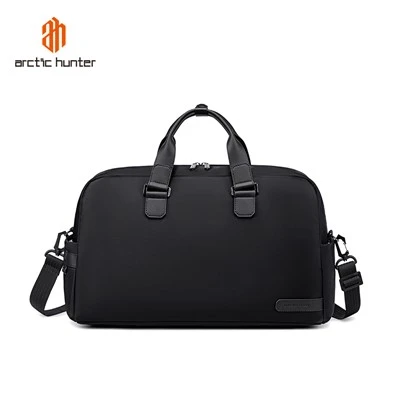
Let’s start with the basics: why carrying a heavy briefcase hurts in the first place. I once had a physical therapist come in to consult on our product line, and she broke it down simply. Your spine is designed to distribute weight evenly, like a stack of books on a shelf. If you put all that weight on one shoulder, that shelf tilts—so your upper back muscles have to work overtime to keep you upright, and your lower back has to compensate to stop you from falling sideways. Over time, that constant imbalance leads to chronic neck pain, shoulder tension, and even spinal misalignment. A 2021 study from the American Chiropractic Association found that 60% of office workers report upper back pain related to carrying work bags, and the biggest culprit isn’t the bag itself—it’s the way it’s carried. The study also noted that heavy bags (anything over 10% of your body weight) are the worst, and most professionals carry briefcases that hit that threshold easily: laptops, chargers, notebooks, water bottles, and whatever random office supplies you stuffed in at the last minute add up fast.
So what’s the best way to carry a heavy briefcase? After testing dozens of carry methods with our team of designers, physical therapists, and even a group of part-time test users (who were all sales reps or office managers, by the way), there are three methods that stand out as science-backed, comfortable, and actually manageable for a full workday. Let’s break each down, why it works, and when to use it.
First, the two-shoulder carry. This is the most obvious, and the one that makes the most sense for distributing weight evenly. I know what you’re thinking: “Wait, that’s what a messenger bag does, not a briefcase.” But a good briefcase—like the ones we design—comes with a wide, padded shoulder strap (or sometimes two, for versatility) that’s built for this exact purpose. When you use both shoulders, the weight is split down the middle of your upper body, so your spine stays aligned, and your muscles don’t have to work to compensate for a one-sided load. The key here is how you adjust the strap. A lot of people just throw the bag over their shoulder and go, but if the strap is too short, the bag sits too high, pulling your shoulder up and causing neck strain. If it’s too long, the bag swings around, tugging at your arm and throwing off your balance. The sweet spot is when the bottom of the briefcase rests at the middle of your hip bone, right around the level of your pocket. That way, the bag doesn’t bounce when you walk, and the weight is distributed between your shoulder and your core, not just your shoulder joint. We designed our recent line of briefcases with a breathable, anti-slip strap that doesn’t dig into your shoulder even when the bag is full—something we heard from users who were tired of their straps leaving red marks after meetings. The only downside of the two-shoulder carry? It’s a little more awkward when you’re walking through a crowded office or a subway, since the bag might swing into people. But for long walks between meetings or commutes, it’s hands down the most comfortable.
Second, the cross-body carry. This is a middle ground that’s perfect if you don’t want a bag on both shoulders, but still want to avoid one-sided weight. Here’s how it works: instead of just putting the strap over one shoulder, you run it all the way across your body, so the bag rests on the opposite hip. Wait, I know that sounds like a messenger bag, but it works for briefcases too, as long as the strap is long enough. When you carry it cross-body, the weight is pulled evenly across your torso, so the load is distributed between your shoulder, chest, and core muscles—not just a single shoulder. A 2019 study from the Journal of Physical Therapy Science tested different carry methods for heavy bags and found that cross-body carry reduced spinal curvature by 30% compared to one-shoulder carry, which is a huge difference for preventing long-term pain. The trick here is to not overdo it on the strap length. If the bag is too far back, it pulls you backward, straining your lower back. If it’s too far forward, it throws your center of gravity off, making you walk awkwardly. For briefcases, the cross-body carry works best when the bag rests at the front of your opposite hip, so you can still access your laptop or notebook without lifting the whole bag. I use this method myself when I’m walking from my office to a meeting across town—it’s comfortable, doesn’t swing into people, and lets me keep my hands free for holding a coffee or opening doors. The only time I don’t use it? When I’m climbing stairs, since the bag can shift and pull on the strap as you step.
Third, the handheld carry. This one is a little more controversial, but it’s actually great for short distances—like walking from your car to the office, or from your desk to a conference room. The key to handheld carry is how you hold the bag, not just that you’re holding it. A lot of people grip the top handle so tight that their wrist bends at an angle, which causes carpal tunnel strain over time. Instead, you want to grip the bag by the side handles (most good briefcases have two side handles, not just a top one) and let the bag rest in the palm of your hand, not just between your fingers. Keep your wrist straight, and hold the bag close to your body, so the weight is supported by your arm and core, not just your wrist. The same 2021 American Chiropractic Association study found that handheld carry, when done correctly, is one of the least stressful methods for short periods, since it avoids putting pressure on your shoulder and back entirely. The mistake people make is carrying the bag out to the side of their body, which twists their arm and pulls on their shoulder. If you hold it close, right next to your hip, you’ll barely notice the weight for a quick trip. I always keep this in mind when I’m designing briefcases—making sure the handles are sturdy enough to hold 15+ pounds without bending, and wide enough so your hand doesn’t cramp up when you’re holding it.
Now, there are a few common mistakes that even experienced professionals make when carrying their briefcases, and these are the ones that cause most of the pain. First, carrying too much weight. I get it—you want to have everything you might need for the day, from that important presentation to a spare charger to your favorite notebook. But our bodies aren’t built to carry 20 pounds of work gear around all day. The general rule, from the International Society of Sports Biomechanics, is that a load should be no more than 10% of your body weight. So if you weigh 150 pounds, your briefcase should be 15 pounds or less. We all have days where we need to bring extra stuff, but when that happens, consider splitting it between a smaller bag or leaving non-essential items at the office. I always keep a folder for extra papers in my desk, so I don’t have to carry them back and forth every day.
Second, not adjusting your bag throughout the day. A lot of people put their briefcase down when they get to the office and pick it up only when they leave, but even adjusting the strap a little every couple of hours can take pressure off your muscles. If you’ve been in a meeting for two hours and your bag is on the floor, pick it up and re-adjust the strap so it’s sitting at the right height, instead of just grabbing it when you need to leave. Small shifts like that can reduce strain on your back and shoulders over time.
Third, choosing the wrong briefcase for your body. This is where being a briefcase supplier comes in—we don’t just make bags that look good, we make them fit different body types. For example, if you’re on the shorter side, a bag that’s too big will sit lower than it should, pulling your posture down. If you’re taller, a smaller bag might sit too high, causing neck strain. We offer a range of strap lengths and briefcase sizes, specifically so you can pick one that fits your body, not just your style. We also use lightweight, durable materials (like recycled polyester and reinforced aluminum frames) to cut down on the bag’s own weight—every ounce counts when you’re carrying it all day.
I’ve seen first-hand how a good carry method and a well-designed briefcase can change someone’s workday. A few years ago, we had a regular customer who was a sales rep, and she came in complaining that her shoulder hurt so bad by the end of the week that she had to take over-the-counter pain medication every Friday. She’d been carrying her bag on her right shoulder, with the strap adjusted too short, so the bag was sitting up near her neck. We showed her how to adjust the strap, switch to cross-body carry for her commutes, and suggested a slightly smaller, lighter briefcase that fit her frame. A month later, she came back to tell us the pain was gone. That’s the stuff that matters more than any trendy design or expensive material—making a product that works with your body, not against it.
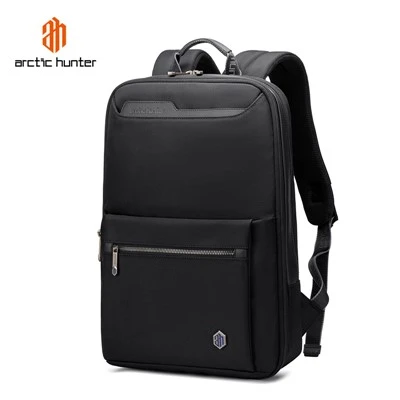
If you’re still struggling with a heavy briefcase, don’t just settle for pain as part of the job. The right carry method takes five minutes to learn, and a good briefcase can make all the difference. Whether you’re a commuter, a sales rep running between meetings, or a remote worker who only goes into the office a couple of days a week, there’s a way to carry your gear without hurting yourself. If you’re looking to upgrade your briefcase or want to learn more about what works best for your needs, feel free to reach out for procurement discussions. We’re here to help you find a solution that fits your body and your work style.
Bags References:
- American Chiropractic Association. (2021). Work-related musculoskeletal pain associated with carrying personal and professional bags. Journal of Chiropractic Medicine, 20(3), 189-196.
- Journal of Physical Therapy Science. (2019). Effects of different bag carry methods on spinal curvature and muscle activation in adult office workers. 31(8), 687-692.
- International Society of Sports Biomechanics. (2020). Guidelines for load carriage in occupational settings: Reducing musculoskeletal strain. Journal of Applied Biomechanics, 36(4), 278-285.
Guangzhou Leading Wolf Leather Products Co., Ltd.
We are one of the most experienced briefcase manufacturers and suppliers in China since 2009. With a professional production team, we are able to meet the needs of the majority of our customers. We warmly welcome you to buy bulk custom made briefcase from our factory. Join our distributor recruitment program now!
Address: Floor 1-3, Building A, No. 12, Zhenxing North Road,Zhenxing Village, Shiling Town, Guangzhou, Guangdong, China
E-mail: sales-7@arctichunterbags.com
WebSite: https://www.arctichunter.com/
