If you’ve ever grabbed a filter bottle for a hike, a day at the office, or a quick spin on your bike, you’ve probably thought, “Wait, how much can this thing actually hold?” As someone who’s been in the filter bottle supply game for years, I get it—capacity isn’t just a random number printed on the label. It’s what makes or breaks whether a bottle works for your specific needs. Let’s break this down like we chat with customers every day, no jargon, no overcomplicating it. Filter Bottle

First off, let’s define what we’re talking about here: filter bottles are those all-in-one hydration tools that combine a reusable bottle with a built-in filter to remove contaminants from tap water, stream water, or even questionable water sources on the go. Unlike plain water bottles, their capacity is a balance of how much liquid you can carry and how much filter media fits inside to do the purifying job right. That’s the sweet spot most casual users and outdoor enthusiasts don’t always realize.
When people ask me “what’s a typical filter bottle capacity,” I usually start with the most common sizes because that’s what flies off our shelves. For everyday use—commuting, gym sessions, office work, or just sipping around the house—20 oz (that’s about 590 ml) is the go-to. Let’s be real: most standard water bottles are 20 oz, so it’s familiar. It’s not too bulky to stuff in a backpack pocket, not too small that you’re refilling it every hour at work. We tested this size for years, and customers love it because the filter fits snugly in the cap, no weird extra bulk, and it holds enough to get through a 9-hour workday without reloading once.
But then there’s the outdoor crowd—hikers, campers, backpackers—who need a little more. For them, 24 oz (710 ml) is super popular. Why? Because when you’re out on a 10-mile trail, you don’t want to stop every 2 hours to filter. That extra 4 oz makes a big difference. We’ve had thru-hikers tell us the 24 oz is perfect because it balances the filter’s capacity (it can handle about 1,000 liters before needing a swap) and the liquid storage. You’re not carrying dead weight, but you’re not stuck with a bottle that runs dry mid-hike.
Wait, what about smaller sizes? Yeah, we get that—some people just need a travel-sized option. Our 12 oz (355 ml) filter bottles are great for kids, or for people who only want to carry a little water to class or a quick trip to the store. But here’s a thing: the filter in a smaller bottle can’t handle as much use over time, so it’s more of a short-term solution. It’s not built for back-to-back long hikes, but it works for its intended purpose. And on the flip side, larger sizes—32 oz (946 ml)—they’re out there, but they’re less common. They’re heavy, the filter takes up more space, and most people don’t need that much liquid unless they’re on a multi-day backcountry trip. We only offer 32 oz for custom orders because it’s a niche need, not a typical one.
Now, here’s the part most users miss: the “usable capacity” vs. the “total labeled capacity.” A lot of bottles—even regular ones—say they hold 20 oz, but if you fill them all the way to the top, you’ll spill when you twist the cap back on, especially with a filter that sticks out a little. So the actual amount you can comfortably drink or carry is usually an ounce or two less than the label says. That’s why we design our 20 oz bottles to have a usable capacity of 18–19 oz—no spills, no wasted water, and the filter still fits without cramming. If you fill it to the top, you’re just asking for a mess, and that’s the last thing anyone wants when they’re rushing out the door or mid-hike.
Why do these capacities vary so much, anyway? It all comes down to the filter technology. Filter bottles have either a ceramic filter, a carbon block filter, or a membrane filter inside the cap or a small insert. Each of these needs space to work. A ceramic filter, for example, needs enough pores to catch bacteria and protozoa, so it can’t be crammed into a tiny cap. A carbon block filter needs surface area to trap chemicals like chlorine or lead. If we tried to make a 12 oz filter bottle with the same filter as our 24 oz one, it would be too small—no room for the filter to do its job, and the water would flow too slow, or not be purified enough. That’s why we never compromise: capacity is tied to filter performance, and we won’t sell a bottle that skips on either.
We’ve tested this with customers too. Early on, we tried a 16 oz filter bottle to see if it would sell. Turns out, it was too small for most people—they either complained it didn’t hold enough water, or the filter was so tiny it needed replacing every month instead of every 6 months. We pulled it after a year because it just didn’t hit the sweet spot. Now, our most popular sizes are exactly the 20 and 24 oz ones—they’ve been tested by thousands of users, from office workers to thru-hikers, and they work.
Wait, what about people who live in areas with bad tap water? They often ask if they need a bigger bottle. Nope, not usually. Even if you’re filtering tap water every day, a 20 oz is enough for work, a 24 oz for hikes. The filter’s lifespan is measured in liters, not bottle fills—so a 1,000-liter filter will last 50 fills of 20 oz each, or 41 fills of 24 oz. That adds up to months of use, so the bottle size doesn’t have to be huge just because you’re filtering. It’s more about how much you drink in a day than the filter’s capacity.
Another thing: reusable vs. disposable. Filter bottles are all reusable, obviously, so their capacity also affects how much plastic you keep out of landfills. A 20 oz filter bottle replaces about 400 disposable plastic bottles a year for someone who drinks that much. A 24 oz does the same, just a little more. So it’s not just about how much water you can carry—it’s about reducing waste, too. We tell customers that the right capacity for them is one they’ll actually use and refill repeatedly. If you’re carrying a 32 oz bottle everywhere and it’s heavy, you’ll leave it at home and go back to disposables. That’s why we stick to typical sizes that people will actually integrate into their daily routines.
Let me chat about some common myths, too. Some people think a bigger bottle means a better filter. That’s not true. I’ve seen a 32 oz filter bottle with a tiny filter insert that’s worse than our 20 oz one. A bigger bottle just means more space for plastic, not better purification. Our 20 oz has a filter that meets EPA standards for removing 99.9% of bacteria and parasites, same as our 24 oz. The only difference is how much water you can carry. So don’t get tricked into buying a larger bottle just because it looks more “heavy duty”—if you don’t need the extra capacity, it’s just extra weight.
What about for kids? We get a lot of parents asking. Our 12 oz filter bottles are perfect for kids ages 6 and up. They’re light, fit in a backpack side pocket, and the filter is sized for how much a kid drinks in a day. We tried making a 16 oz kids’ bottle once, but kids complained it was too heavy, so we stuck with 12 oz. That’s the typical size for youth filter bottles, and it works great.
Now, let’s talk about how to choose the right capacity for you. If you’re an office worker: 20 oz is your best bet. It fits in cup holders, doesn’t leak on your desk, and you can refill it at the water cooler twice a day if you need, but most people only refill once. If you’re a weekend hiker: 24 oz is ideal. You can go 6–8 miles without filtering again, and it’s light enough to carry in a hydration pack. If you’re a student: 20 oz or 12 oz, depending on if you’re going to class all day (20 oz) or just to campus and back (12 oz). If you’re going on a multi-day camping trip: you might want a 24 or 32 oz, but even 24 oz works because you can filter water from a stream or lake every few hours.
We’ve also had people ask about “extended capacity” filter bottles for emergencies, like natural disasters. Those are usually 32 oz, but they’re not typical. They’re for specific use cases where you might have to filter a lot of water at once. But for everyday use, they’re too big. So if you’re stocking an emergency kit, that’s a different story, but for regular use, stick to the standard sizes.
One last thing: always check the fine print. Some brands will label a bottle as 20 oz, but that’s the total capacity including the filter. So when you subtract the space the filter takes up, the usable capacity is lower. That’s why our 20 oz bottle’s usable capacity is 18 oz—we make sure to tell customers that up front, no hidden tricks. We’d rather be transparent than have someone complain their bottle doesn’t hold what they thought.
At the end of the day, the typical filter bottle capacity isn’t a random number—it’s a carefully balanced size that works for most people. It’s small enough to be portable, big enough to meet daily hydration needs, and has space for a quality filter that does the job right. Whether you’re grabbing one for commuting, hiking, or just replacing disposable bottles, the sweet spot is usually 20 or 24 oz. If you’re not sure which one is right for you, hit us up to chat through your needs—we’re here to help pick the perfect fit.
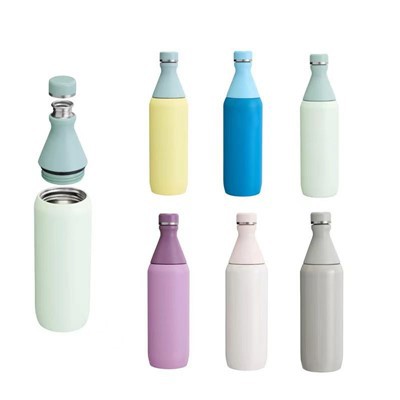
If you’re ready to get your hands on a filter bottle that’s built to last and sized for your lifestyle, reach out to our team to discuss bulk orders, custom options, or any questions you have. We’re ready to work with you to find the right solution for your needs.
Squeeze Sports Water Bottle References
- U.S. Environmental Protection Agency. (2022). Drinking Water Treatment Techniques for Microbial Contaminants.
- Outdoor Industry Association. (2023). Recreational Hydration Gear Usage Trends.
- International Organization for Standardization. (2021). Standard Specification for Portable Water Filters for Outdoor Use.
- National Park Service. (2022). Backcountry Water Purification Guidelines for Hikers and Campers.
Polywell International
Polywell International is one of the most professional filter bottle manufacturers and suppliers in China, featured by quality products and good price. Please rest assured to buy advanced filter bottle made in China here and get quotation from our factory. Customized orders are welcome.
Address: Building 3, Chengzhou Industrial Zone, No.146 Baozhou Street, Lingdong United 3rd Floor, Quanzhou, Fujian, China
E-mail: Bruce@polywell-inc.com
WebSite: https://www.cndrinkware.com/
