Hey guys, let’s cut to the chase—if you’re here, you’re probably either in the market for tubular modules, already buying from a supplier like me, or just weirdly curious about whether these things can actually be reused. As someone who’s been selling tubular modules for 7 years now, I’ve heard every take: “They’re disposable, right?” “What’s the point of reusing them anyway?” “Will they even hold up after one use?” Today I’m breaking this down, no jargon, no sales fluff, just real talk from a guy who deals with these modules day in and day out. Tubular Modules
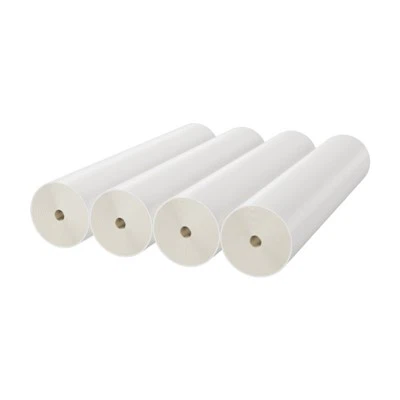
First off, let’s make sure we’re on the same page here. Tubular modules, if you’re new to the game, are those cylinder-shaped core components we supply—used mostly in water treatment (reverse osmosis, nanofiltration, that stuff), food and beverage processing, even some industrial wastewater setups. Think of them as the workhorses that filter out gunk, contaminants, and whatever else you don’t want in your final product or discharge. I’ve sold to everyone from small municipal water treatment plants to huge food factories, and one thing I’ve noticed is that almost every single one of these clients asks about reuse at some point. Why? Because let’s be real—supply chain delays are a nightmare, and new modules aren’t cheap. No one wants to drop cash on something that feels like it’s gonna hit the landfill a month later.
So the big question: can tubular modules actually be reused? Short answer—yes, but it’s not as simple as just yanking them out of one system and dropping them into another. I’ve seen clients try that, and 9 times out of 10, it ends badly. That’s why I always walk new clients through the difference between “salvaging” a module and “properly reusing” it. Salvaging is sticking it back in without checking, which usually leads to poor filtration, higher energy bills, or even system breakdowns. Proper reuse? That’s a whole process, and it works—if you do it right.
Let’s get into the nitty-gritty of why tubular modules can (and should) be reused, when it makes sense, and when it’s better to just replace them. First, what makes a tubular module fail prematurely? 90% of the time it’s not the core material itself—it’s what’s been clogging or damaging it during use. I see this all the time: clients run them until they’re barely producing water, then just throw them away, even if the membrane or core is still intact. The problem isn’t the module—it’s the fouling, scaling, or physical damage from bad maintenance. That’s where reuse comes in.
Now, let’s talk about the process of reusing our tubular modules, specifically the ones we supply. First, you have to remove them from your system, obviously—important to do that carefully, no harsh yanking, because the end caps and O-rings are delicate. Then comes the cleaning and inspection, which is the make-or-break step. I can’t stress this enough: if you skip the deep clean, the module’s trash. Our team has trained dozens of clients on this, and here’s what the process looks like for our standard polyamide and PVDF modules.
First step: pre-rinsing with neutral pH water to get rid of the big gunk—biological matter, suspended solids, leftover food particles, whatever was passing through. Then, chemical cleaning. For most clients, we recommend a two-part clean: first a caustic solution (pH 11-12) at about 40°C to dissolve organic fouling, then an acidic solution (pH 2-3) to break down mineral scaling like calcium carbonate or silica. We have specific guidelines for different module sizes and applications, so I always tell clients to hit us up for the exact mix—using the wrong chemicals can eat through the membrane and ruin the module faster.
After cleaning, you have to test the module. This is non-negotiable. We supply quick-reference test strips for pressure and flux (that’s how much water it produces) so clients can check at a glance. If after cleaning, the flux is at least 80% of the original new module, and the pressure drop is under 15% of new, that’s a green light for reuse. If not? Time to retire it. Simple as that.
Now, when does reusing make sense, and when should you just buy new modules from me? Let’s break that down by industry, because that’s where the line shifts. For example, small to mid-sized municipal water treatment systems: their tubular modules are usually used for secondary or tertiary filtration, and the fouling is mostly organic. Reusing here works great—clients can cut their module costs by 30-40% if they follow the cleaning process I outlined. I had a client in Ohio last year, a small town with a budget crunch, who started reusing their modules instead of buying new every 6 months. They saved over $12,000 in a year—no joke, that’s money they put towards upgrading their water testing lab, which meant safer water for their residents.
On the flip side, high-stakes industries like pharmaceutical or semiconductor manufacturing. Their tubular modules are used for ultra-pure water, so even a tiny amount of leftover contaminants can ruin batches. For these guys, reuse might not be worth the risk. I always tell them that for their critical process modules, it’s better to replace after 1-2 uses max, because the cost of a bad batch is way higher than the cost of new modules. That’s where our supply chain reliability comes in—we make sure they never run out of new modules when they need them, so they don’t have to cut corners.
Another big factor: module age. If a module is already 3 years old when you take it out, no amount of cleaning is gonna bring it back to new. The membrane starts to degrade over time, UV exposure can break down the polymer, and even proper storage doesn’t stop that. I always advise clients to only consider reusing modules that are less than 2 years old, with minimal signs of physical damage—no cracks in the core, no torn membrane, no chewed O-rings from improper installation.
Wait, let’s address a common myth I hear all the time: “Reused modules are less efficient, right?” Yeah, at first, maybe. But if you do the cleaning right, the efficiency drop is minimal. I’ve had clients run reused modules for up to 4 years, with only a 10-15% flux drop from original, which is way better than buying new every year. And the environmental angle? Let’s be real—landfills are overflowing with plastic and membrane waste. Reusing modules keeps them out of the landfill for longer, which is a big win for clients who care about their carbon footprint. I work with a lot of eco-focused food brands, and they love that reusing modules helps them hit their zero-waste goals.
Now, what about the downsides? Let’s not sugarcoat this, because if I’m gonna give real talk, I have to mention the bad parts. First, the upfront time and cost of training your team on proper cleaning and testing. It’s not like anyone can walk in off the street and do it—you need basic knowledge of pH levels, chemical handling, and how to read flux tests. That’s why I offer free 1-hour training sessions for all my clients, no extra charge. Second, there’s a small risk of cross-contamination if you reuse modules between different applications. For example, don’t use a module that filtered food waste to filter drinking water without an extra sterilization step. I always remind clients to label modules clearly, track their use history, and never mix applications. Third, some modules are just not designed for reuse. The cheap, thin ones you might find from a random online supplier? They’ll fall apart in the cleaning process. That’s why using quality modules from a reputable supplier like me is non-negotiable for reuse.
Let’s talk about my own experience here, because that’s what I know best. Last quarter, a client in Texas got hit with a huge supply chain delay—they order our modules every 3 months, but there was a shipping backlog that meant new modules wouldn’t arrive for 6 weeks. Their system was struggling, production was at a standstill, and they were this close to panicking. I walked them through the cleaning process over the phone, had them send over a sample module, tested it in our in-house lab, and gave them the go-ahead to reuse their old ones. They ran on reused modules for 5 weeks, no issues, and when the new shipment came, they were able to swap out only the ones that were starting to degrade. Saved their business, and they ended up ordering twice as many modules from me that quarter because they trusted that I’d help them in a pinch. That’s the kind of client relationship I care about— not just selling a product, but helping you solve problems when things go wrong.
Another example: a craft brewery in Colorado. They use our tubular modules to filter their beer before packaging. A few months back, their old module cleaning process was all wrong—they were using too strong a caustic solution, which was breaking down the membrane after one use. I showed them the correct solution mix, trained their lead tech, and now they reuse their modules 3 times, no issues. They told me that their module costs went down by half, and their beer quality stayed consistent, which is huge for a craft brewery—their reputation rides on every batch.
So, to wrap this up: can tubular modules be reused? Absolutely, but only if you do it the right way. That means using quality modules from a supplier who stands behind their product, doing a deep clean with the correct chemicals, testing every module before you put it back in service, and only reusing modules that are less than 2 years old with no physical damage. Reuse makes sense for most non-critical applications, saves you money, reduces waste, and even keeps your operations running when supply lines are messy. For high-stakes industries, it might not be worth the risk, but that’s what reliable new module supply is for.

Now, if you’re thinking about reusing your tubular modules, or if you just want to chat about your system needs—hit me up. I don’t do pushy sales calls, I just answer questions and give honest advice, even if it means you don’t need to order anything today. If you need training on cleaning processes, module testing, or just want to know how many times your specific modules can be reused, I’m here to help. No hoops to jump through, no fine print—just a supplier who’s been in this game long enough to know what works and what doesn’t.
High Pressure Membrane References:
- American Water Works Association. (2020). Reuse and Regeneration of Membrane Systems for Water Treatment. AWWA Press.
- Food and Agriculture Organization of the United Nations. (2021). Membrane Module Reuse for Agri-Food Processing: Best Practices and Environmental Impacts. FAO Technical Paper.
- Global Water Intelligence. (2022). Cost Optimization Strategies for Tubular Membrane Systems in Industrial Applications. GWI Research Report.
- Membrane Technology & Research, Inc. (2019). Durability and Reusability of PVDF and Polyamide Tubular Modules. Journal of Membrane Science Applications.
Hangzhou Nanoimp Environmental Technology Co., Ltd.
With abundant experience, we are one of the most professional tubular modules manufacturers and suppliers in China. Welcome to wholesale high quality tubular modules in stock here and get pricelist from our factory. We also accept customized orders.
Address: Road 25, Baiyang Street, Qiantang District, Hangzhou City, Zhejiang Province
E-mail: keith.wang@nano-sepmer.com
WebSite: https://www.nanoimp-membrane.com/
