Hey there! Let’s cut to the chase—if you’re in a factory, refinery, printing shop, or even a car body shop, you’ve probably heard the term “waste gas treatment equipment” thrown around, maybe in a safety meeting or when someone’s talking about local compliance rules. But what the heck is it actually? And more importantly, why should you care, especially if your operations are blowing off fumes that are more than just a nuisance? Waste Gas Treatment Equipment
I run a waste gas treatment equipment supply company, and let me tell you—9 out of 10 times, when a plant hits me up for the first time, they’re panicking because they got a notice from environmental regulators. That’s never a good look, but it’s also a perfect chance to explain why this stuff isn’t just another shiny metal box to bolt to your exhaust stack. Let’s break it down like we’re chatting over a coffee (no stuffy jargon, promise).
First off, let’s get the basics right: Waste gas treatment equipment is any system that cleans up the gases your operation releases into the air before they head outside. Think of it like a giant, specialized filter—but not just for dust. This stuff handles all kinds of yucky pollutants: volatile organic compounds (VOCs) from painting, solvents, or chemical processes; particulate matter (soot, tiny metal shavings, or paint mist from sanding); hazardous air pollutants (HAPs) like benzene or formaldehyde; even smog-forming compounds and stinky gases that make your neighbors knock on your door.
Wait, why do you need to care? Yeah, regulatory fines are one reason—we’ve seen places get hit with tens of thousands of dollars for violating air quality rules, and that’s just the start. But also, your workers are breathing that air too. If you’re running a factory where employees are standing next to an open exhaust stack blowing unfiltered fumes all day, that’s not going to end well for their long-term health. Plus, bad air can tank your brand—if customers find out you’re cutting corners on emissions, that’s a reputation hit you can’t undo.
Now, let’s talk about the different types, because not all waste gas treatment equipment is the same—what works for a small printing shop won’t cut it for a big refinery. Let’s go through the common ones, since that’s what most people ask me about.
First, activated carbon filters. This is probably the most common one for small to medium operations, or for cleaning up VOCs that are easy to adsorb (stick to a surface). Activated carbon is super porous—like, one gram can have a surface area bigger than a football field. So when gas flows through the filter, the pollutants stick to the carbon, and clean air comes out. The catch? The carbon gets full after a while, so you have to replace or regenerate it (heat it up to burn off the pollutants, which lets you reuse the carbon a few times). It’s affordable, easy to install, perfect for things like small paint booths or lab fume hoods.
Then there’s thermal oxidizers. These are the heavy hitters for higher-volume, higher-concentration pollutants. If you’ve got a plant blowing off a lot of VOCs or HAPs, a thermal oxidizer heats the gas up to super high temps (like 1,500 to 2,000 degrees Fahrenheit) so the pollutants break down into harmless stuff—carbon dioxide and water vapor. There are a few types here: direct-fired oxidizers (if the gas is super concentrated, it can even fuel itself, saving you on energy costs), catalytic oxidizers (uses a catalyst to lower the temp needed, so it’s cheaper to run than direct-fired, good for lower concentrations), and recuperative oxidizers that recover the heat from the exhaust to warm up the incoming gas, boosting efficiency even more. I’ve installed these at food processing plants and chemical manufacturers, and they work like a charm for tough pollutants.
Another one is scrubbers—wait, no, not the bathroom kind. Gas scrubbers for waste gas treatment work by spraying a liquid (usually water or a chemical solution) into the gas stream to pull out pollutants. There are wet scrubbers for particulate matter or acidic gases (like sulfur dioxide from power plants) and dry scrubbers that use a dry chemical to neutralize pollutants, good for things like ammonia or chlorine. Scrubbers are great for factories that have a mix of solid particles and gaseous pollutants, and they’re also good at controlling odors—something carbon filters might not handle as well for persistent stinks.
Then there’s electrostatic precipitators (ESPs). These use electricity to charge tiny particles in the gas stream, then collect them on oppositely charged plates. They’re super efficient at capturing fine particulate matter—like soot from steel mills or cement plants—and they don’t need a lot of replacement parts, which is a plus for high-volume operations. The only downside? They’re bigger and more expensive upfront, but they pay off over time because they use less energy than some other systems.
I get it—this sounds like a lot to wrap your head around. A lot of my customers come in thinking, “I just need something to stop the fines,” but the best waste gas treatment equipment isn’t just a band-aid. It’s tailored to your specific process. For example, a print shop that uses water-based inks needs a different system than a auto body shop that sprays solvent-based paints. If you mix up the wrong equipment, you’ll end up with something that doesn’t work, wastes money on energy or replacement parts, and still doesn’t meet regulations.
That’s why when I talk to a new customer, I don’t just show them a catalog of systems. I ask questions: What kind of gas are you releasing? How much volume are you pushing through per hour? What’s the concentration of pollutants? What are the local regulators requiring? Are you dealing with odors, fine particles, or toxic chemicals? Once I have that info, I can recommend the right system—sometimes even a combo, like a pre-filter to catch big particles before they hit a carbon filter, or a scrubber paired with a thermal oxidizer.
Wait, let’s talk about why I’m the person to talk to about this (no, I’m not just saying that because I run the business). A lot of smaller suppliers will sell you a one-size-fits-all system that doesn’t account for your unique needs, or cut corners on materials to keep the price low. But waste gas treatment equipment has to be durable—if it breaks down, your operations shut down, and you’re right back to dealing with regulators. I source my equipment from manufacturers that use high-grade stainless steel and corrosion-resistant materials, so they can handle harsh gases without rusting or failing. And I offer after-install support too—like regular maintenance checks, replacement part delivery, and troubleshooting. You don’t want a system that you can only use once, or that requires a specialized engineer to fix every time something goes wrong.
Another thing I hear a lot: “Waste gas treatment is too expensive.” Yeah, upfront costs add up, but look at the long game. The fines for non-compliance? They can be $10,000 a day in some areas. Downtime if your process gets shut down? That’s way more than the cost of a good system. Plus, many regions offer tax incentives or grants for installing air quality equipment—something I help customers navigate all the time. I’ve had small business owners tell me that the tax credit covered 30% of their system cost, and the energy savings from an efficient oxidizer paid for the rest in two years.
Let me give you a quick real example. A small custom cabinet shop hit me up a few months ago because the local EPA dropped a notice saying their paint fumes were violating air quality limits. They had a cheap carbon filter from a big box supplier that was full within two months, so they were spending a fortune replacing it and still getting warnings. We did a full audit, found that their spray booth was blowing out too much volume of solvent-based fumes, so we installed a catalytic oxidizer with a pre-filter to catch paint mist. The upfront cost was a bit higher than the cheap filter, but it runs on way less energy, they only need to do a full maintenance check once a year, and they haven’t gotten a notice since. They saved more than $5,000 a year on replacement filters and energy, and avoided any fines. That’s the kind of win I love to see.
So, to circle back to the original question: What is waste gas treatment equipment? It’s not just a bunch of pipes and filters. It’s a system that protects your workers, keeps you compliant, saves you money in the long run, and helps keep the air we all breathe clean. If you’re running an operation that releases any kind of industrial gas, you’re going to need it at some point—whether that’s next week or next year.
Wait, I don’t want to wrap this up without saying this: I’m here to help, no pressure. If you’re not sure what you need, just reach out. I can walk you through the basics, answer all your questions, and even help you figure out what your local requirements are. No sales pitch, no pushy tactics—just straight talk about what will work for your business.
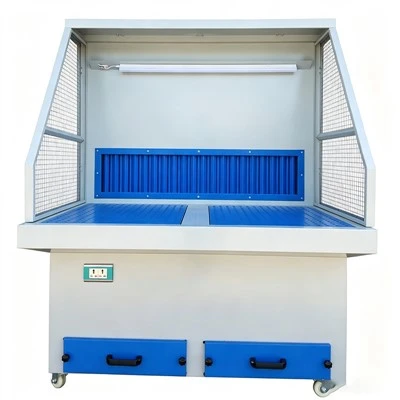
Grinding Table If you’re dealing with unfiltered waste gas, getting regulatory notices, or just want to upgrade your system to be more efficient and compliant, don’t wait. The longer you put it off, the higher the risk. Hit me up, and we can chat through your specific needs.
References
- US Environmental Protection Agency. (2022). Air Pollution Control Technology Fact Sheet: Volatile Organic Compound Controls.
- World Health Organization. (2021). Air Quality Guidelines for Pollutants from Industrial Processes.
- National Fire Protection Association. (2020). Standard for Thermal Oxidizer Systems for Industrial Applications.
- Occupational Safety and Health Administration. (2023). Hazard Communication Standard: Air Contaminant Controls for Industrial Workplaces.
Ningbo Jialong Energy-saving and Environmental Protection Technology Co., Ltd.
As one of the most professional waste gas treatment equipment manufacturers and suppliers in China, we also support customized service. We warmly welcome to buy advanced waste gas treatment equipment in stock here from our factory. If you have any enquiry about quotation, please feel free to email us.
Address: Dong Village, Dongwu Town, Yinzhou District, Ningbo City, Zhejiang Province (No.63 Zhennan Road, Dongwu Town)
E-mail: Lin.cx@nb-jalo.com
WebSite: https://www.cnjialong.com/
